
Sustainability innovation platform
EcoSpark
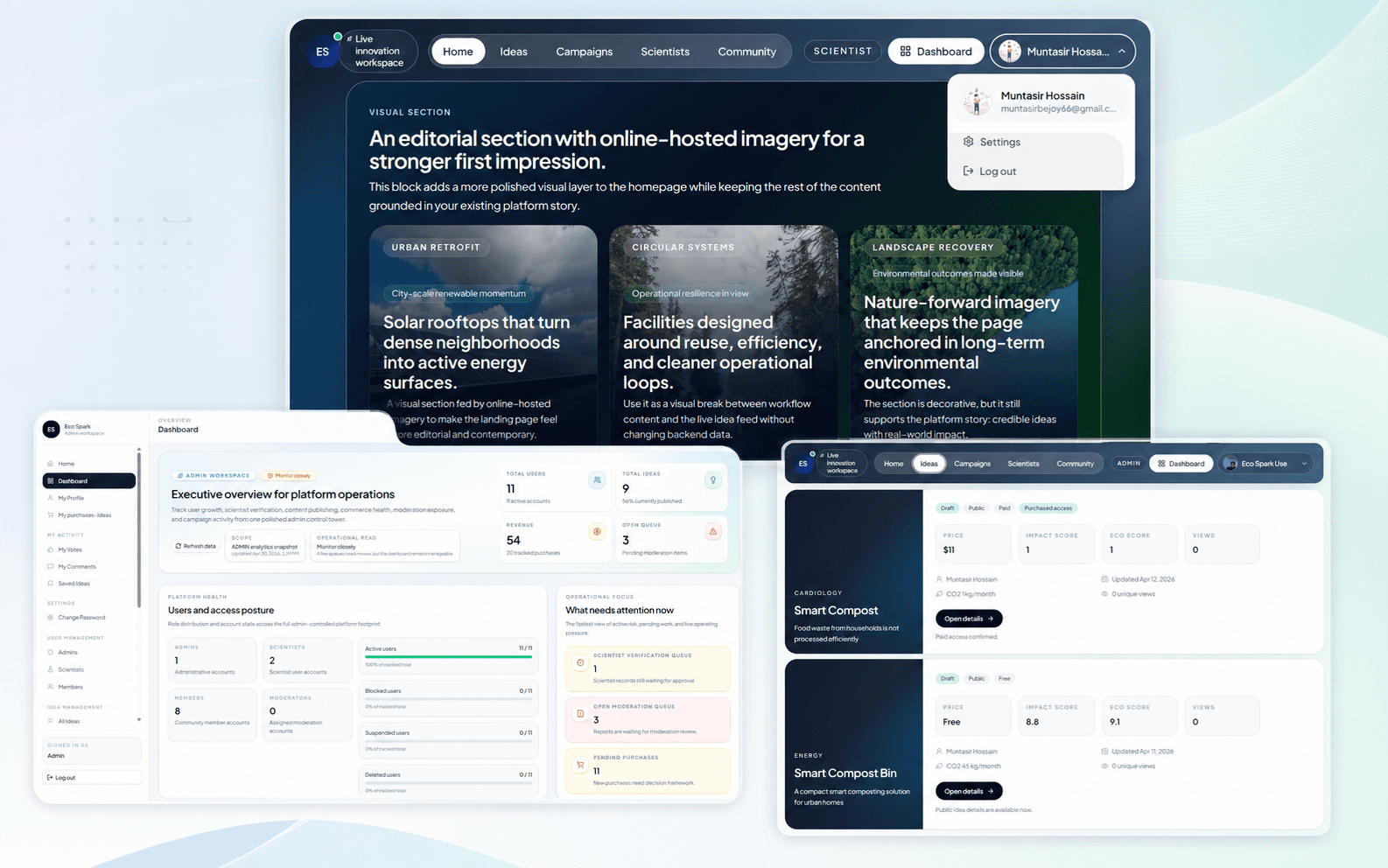
EcoSpark Frontend is the client-side application for a sustainability innovation platform. It supports public discovery, authenticated dashboards, idea moderation, campaign workflows, community interaction, and paid access to premium ideas.
Brief description
A role-based sustainability platform where users can discover eco ideas, manage campaigns, access premium innovation content, and collaborate around environmental solutions.
Public GitHub repository with deployed frontend and connected backend API.
Frontend commits
43
Role-based flows
Multiple
Deployment
Vercel
Case study year
2026
Tech stack deep-dive
Grouped by the role each tool played in the build.
The stack is organized by implementation responsibility so the technical choices are easier to scan than a flat logo list.
Frontend libs
Core rendering, styling, validation, and interface building blocks.






State management
Tools used to coordinate server data, local state, and async UI flows.

Engagement summary
Project links
Role
Frontend architecture + full-stack integration
Timeline
Recent project
Year
2026
Scope
Frontend architecture, responsive UI implementation, API integration, form validation, role-based user flows, and deployment.
Audience
Eco-conscious users, sustainability contributors, campaign organizers, moderators, admins, and users interested in premium innovation ideas.
Deliverables
Challenges faced while developing the project
Sustainability-focused communities often lack a structured digital platform where members, contributors, and admins can manage eco ideas, campaigns, collaboration, and paid knowledge access in one consistent workflow.
Solution and implementation
I built a modern frontend architecture using Next.js, React, TypeScript, TanStack Query, TanStack Form, Zod, Axios, and Tailwind CSS. The application separates public discovery from authenticated workspace flows and connects with a backend API for role-based platform features.
Challenges and learnings
What was hard
What I learned
Potential improvements and future plans
The project creates a scalable frontend foundation for sustainability communities, improving idea discovery, campaign visibility, role-based access, and user interaction across the platform.
Results
What I would improve next