
Food ordering platform
FoodNest
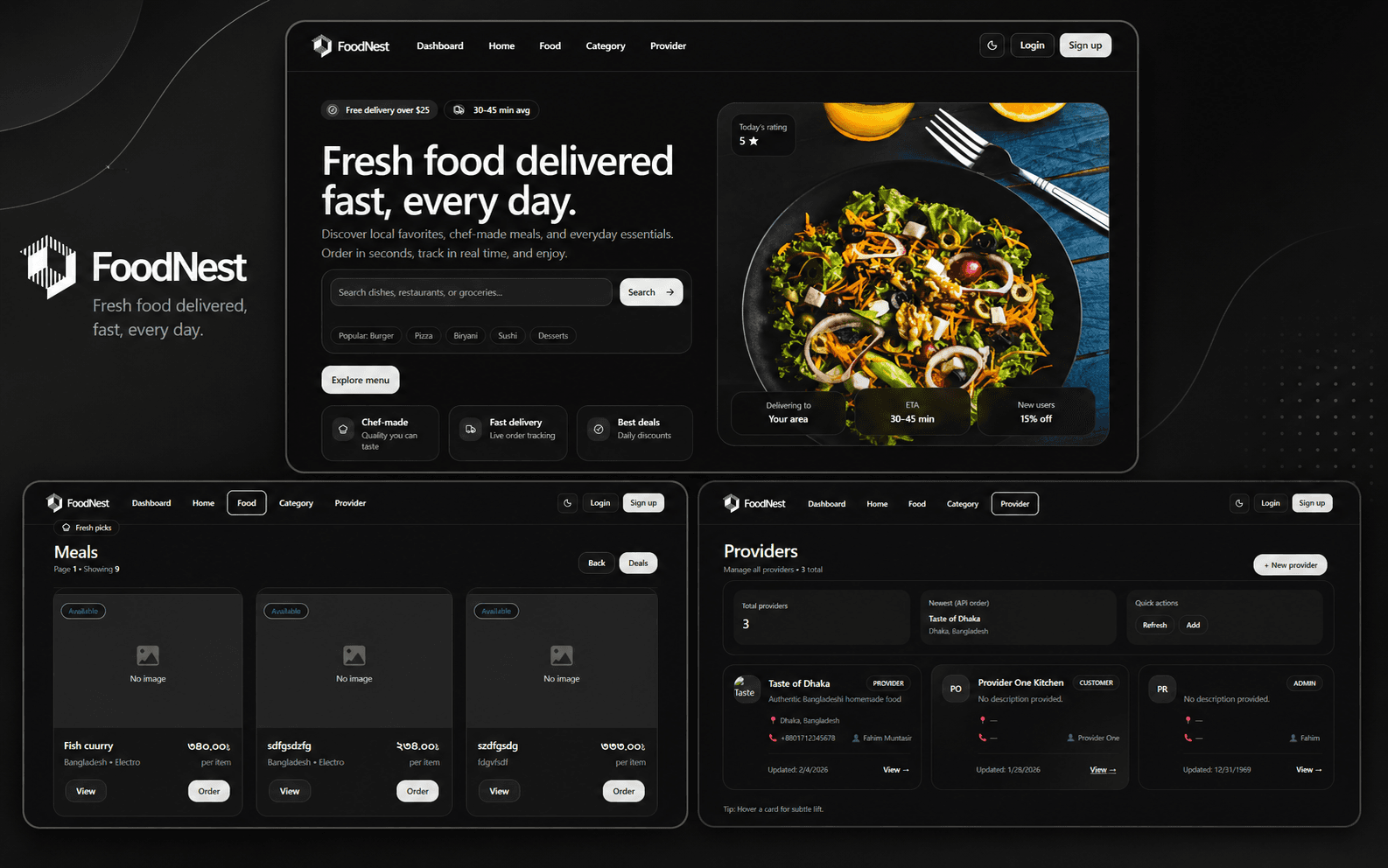
FoodNest Client is the frontend application for a food-focused web platform. It is structured as a modern Next.js project with reusable components, app-level configuration, and a scalable frontend setup.
Brief description
A modern food ordering frontend that helps users browse food items, explore restaurant-style experiences, and interact with a clean client-side ordering flow.





Public GitHub repository. Backend repository is available separately as FoodNest-Server.
Frontend commits
24
Repository type
Client
Deployment ready
Yes
Engagement summary
Main technology stack used
Project links
Role
Frontend implementation + UI engineering
Timeline
Recent project
Year
2026
Scope
Frontend development, reusable component setup, responsive layout implementation, styling system, and deployment preparation.
Audience
Food platform users, restaurant customers, and admins or operators managing a food-ordering experience.
Deliverables
Challenges faced while developing the project
Food ordering interfaces need to present products clearly, support fast browsing, and keep the user journey simple from discovery to action. A weak frontend can make food discovery feel cluttered and slow.
Solution and implementation
I built a Next.js client application with TypeScript-oriented project structure, Tailwind styling, reusable UI components, and deployment-ready configuration. The frontend focuses on clean product presentation and a responsive user experience.
Potential improvements and future plans
The project demonstrates practical frontend engineering for a real-world food platform, including component structure, routing-ready architecture, responsive layouts, and production deployment preparation.
Results
What I would improve next